An irrigation system is the only thing on a residential water service that can run for hours a day, underground, with nobody in the house aware of it. That makes it the first suspect in almost every unexplained bill spike — and, usefully, it is also the easiest suspect to rule in or out, from the curb, in about five minutes, with no tools.
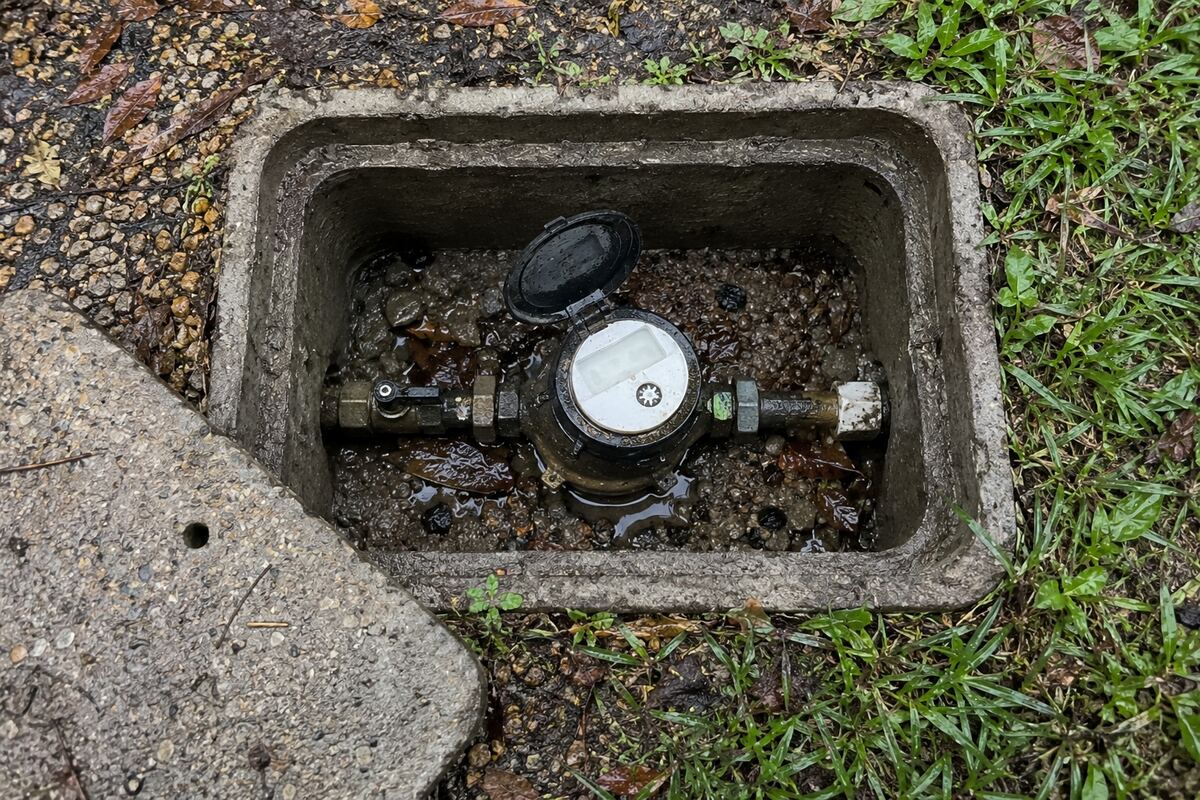
No taps, no washing machine, no dishwasher, no ice maker cycling. Then open the meter box at the curb. Most meters have a small triangular or star-shaped low-flow indicator that spins on a fraction of a gallon. If it is turning with the house quiet, water is moving somewhere on the property.
That is the shutoff at or below the backflow assembly. Close it, wait a minute, and look at the low-flow indicator again. Stopped means the leak is on the irrigation side. Still turning means it is the house — a running toilet flapper is the classic and costs about as much per month as a broken lateral.
A photograph of the meter face, an hour apart with everything off, converts “something is wrong” into a number. That number is what a utility’s leak-adjustment process wants, and it is what tells an irrigator whether they are looking for a weeping valve or an open mainline.
These are the four irrigation faults that produce a bill spike, ordered by how much water they move rather than by how dramatic they look.
The quietest and among the most expensive. A diaphragm that no longer seals lets the zone weep continuously — not a spray, just a permanently damp patch and a head that never quite drains. It runs twenty-four hours a day and produces no noise, no geyser and nothing anyone would photograph. Bills built out of this fault often run for two or three cycles before anyone investigates.
Visible and fast: an open half-inch pipe throwing water for the whole run time of that zone, every scheduled day. Dramatic, but it only runs while the zone runs, which is often less total water than the silent weeping valve above.
The worst case, because the mainline is pressurized at all times. This is the fault that turns into a four-figure bill over a long weekend, and it is covered separately because the first instruction is to shut the water off rather than to diagnose anything.
Not a leak at all, and more common than any of the above. Two programs with overlapping start times, a seasonal adjust left at 150% after a dry August, or a controller reset to factory defaults after a power cut and quietly running every zone every day. Free to fix, and worth checking before assuming anything is broken.
Water providers across this metro bill on different units and different tier structures — some per thousand gallons, some per hundred cubic feet, and many with a steeply rising block rate that makes the last few thousand gallons cost several times what the first few did. That block structure is why a leak feels disproportionate: a system using twice the normal volume very often produces a bill more than twice the normal size, because the extra volume lands entirely in the top tier.
Wastewater is the other half. Many providers charge sewer volume based on water consumption, sometimes capped by a winter average and sometimes not, and where it is not capped a lawn leak gets billed twice — once as water and once as sewer for water that never entered a drain. If the bill looks wrong by more than the meter reading explains, that is usually why, and it is a conversation with the provider rather than with an irrigator.
Many Houston-area providers have some form of leak adjustment, and the shape of it varies: some credit part of the excess once per property per period, some cap it, some only adjust the sewer portion. Nearly all of them require proof that the leak was found and repaired, and a date. That is the practical reason to keep the repair invoice even for a small job.
Yes, and it is normal on clay. Beaumont clay drains poorly at the surface but water travels readily along the bedding sand and the trench line a pipe was laid in, so a break can surface fifteen feet away from itself or find a storm drain and never surface at all. Absence of a wet patch is not evidence of no leak.
The isolation valve does it. Close the irrigation supply and watch the meter: if it stops, the problem is in the yard. If it keeps moving with the house quiet and the irrigation isolated, the leak is on the house side, and that is a plumbing call rather than an irrigation one.
Turning the controller off stops scheduled zone leaks but does nothing about a mainline leak, because the mainline stays pressurized regardless. Closing the isolation valve stops both. In a Houston summer, a fortnight with the system off will stress a lawn but will not kill established St Augustine — the water bill is the more urgent number.
Lateral against mainline, and how a buried break is actually located.
The fault that produces the biggest bills, and where the shutoff is.
Every zone run and watched, which is how weeping valves get found.
Where converting beds to drip genuinely changes the summer number.
Run the meter test first — it is free and it halves the search. Then say what the indicator did with the irrigation isolated, and where in the metro the property is.
Call (346) 605-8787 Describe the Problem Houston